Low Vision
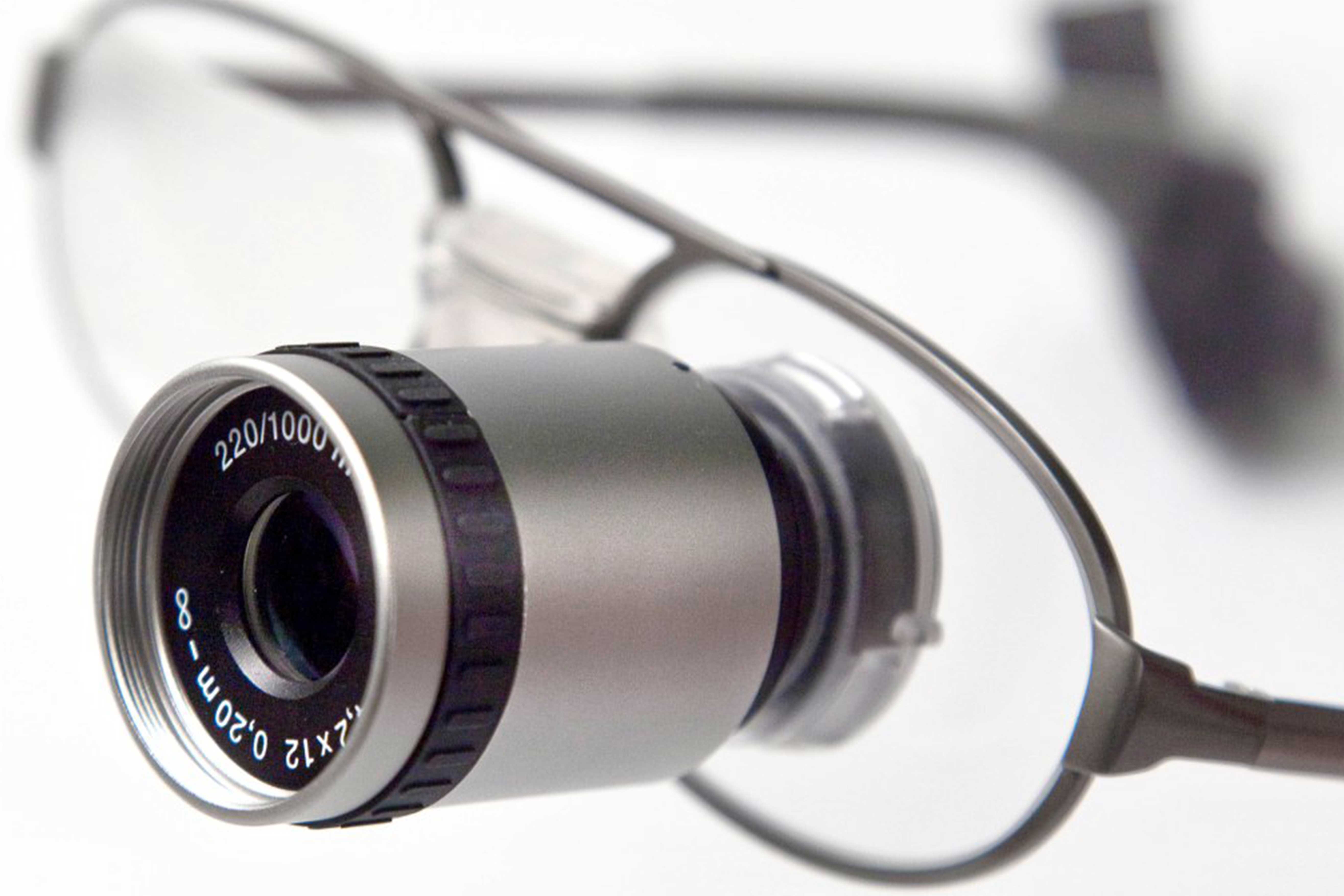
Vision loss that cannot be corrected by ordinary eyeglasses, contact lenses, medication or surgery. A person with low vision has extremely limited sight that interferes with daily activities.
Low vision should not be confused with blindness. People with low vision have some useful vision which can often be improved with low vision aids. Visual impairment may be mild or severe. Low vision usually results in reduced central or reading vision, but may also result from decreased side (peripheral) vision, a loss of color vision, or an inability to properly adjust to light, contrast or glare.
Many aids are available to help people with low vision including magnifiers, reading glasses and closed-circuit television devices.
What Causes Low Vision? :
Several conditions can cause low vision. Each condition may affect sight ability in a different way. People of all ages may have low vision, but the elderly are more often affected. The most common cause of low vision is macular degeneration, an eye disease that affects millions of older adults every year. Low vision can also be caused by inherited diseases, birth defects, eye injuries, diabetes, glaucoma, cataract and aging.
Facts About the Human Eye :
Your eyes are very complex organs. In order for your eyes to see, there must be light. Light rays reflect off of an object and enter the eye through the cornea. At the back of your eye the light is focused by the retina, then it is converted into electric signals to be sent to the brain. Once the brain receives the signals, vision occurs. If your eye cannot properly focus an image, it is said to have a refractive error.
An eye doctor can determine the type of refractive error by a test called a refraction. Correcting a refractive error is achieved by glasses, contacts or refractive surgery. This is basic human vision.
Visual Acuity and Refractive Errors:
Visual acuity is a measure of the clarity and sharpness of your vision. Measuring your visual acuity is a quick method for a health care professional to discover vision problems. Normal visual acuity is usually expressed as 20/20 and indicates the smallest detail a person should be able to see at a standard testing distance of 20 feet. Visual acuity test results help health care professionals determine if you may be nearsighted, farsighted or have astigmatism.
Correction Options:
Vision can be corrected in many ways. Eyeglasses improve vision by bending light. They are safe, economical correction devices. Another vision correction option is contact lenses.
People with active lifestyles enjoy wearing contact lenses because they stay in place better than glasses. Corrective surgery is yet another way to correct vision problems. Refractive surgery reshapes the eye to normalize its light bending abilities so that the quality of vision is improved without the use of additional visual aids.